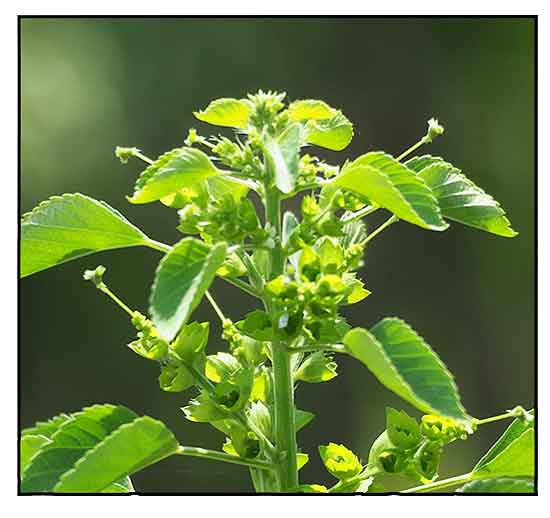
Acalypha indica: A Traditional Medicinal Plant with Hidden Risks for G6PD-Deficient Individuals
Acalypha indica, commonly known as Indian nettle, Kuppaimeni (in Tamil), or Kuppameniya (in Sinhala), is a tropical weed widely found across Asia, Africa, and parts of the Americas. While it’s commonly used in traditional medicine for its therapeutic properties, this plant poses serious risks for individuals with Glucose-6-Phosphate Dehydrogenase (G6PD) deficiency.
Description & Traditional Uses
Taxonomy & Appearance
A calypha indica is an herbaceous annual from the Euphorbiaceae family, characterized by ovate leaves and small inflorescences. It thrives in tropical climates. (Wikipedia, ScienceDirect)
Traditional Medicinal Uses
Across various systems of traditional medicine, it has been used for:
- Respiratory ailments: asthma, bronchitis, pneumonia, as an expectorant.
- Digestive and antiparasitic effects: as a diuretic, purgative, anthelmintic, and for treating gastric disorders.
- Skin and wound healing: soothes scabies, burns, ulcers, maggot-infested wounds, and skin infections.
- Other uses: anti-inflammatory, anti-ulcer, anti-bacterial, anti-fungal, rheumatism relief, and wound healing.
- Some studies even cite potential uses in anticancer, antidiabetic, hepatoprotective, anti-obesity, and anti-venom contexts. (PubMed, IJPSR, journalejmp.com, jchr.org, ResearchGate)
The plant’s phytochemical profile includes flavonoids, glycosides, tannins, cyanogenic glycosides (like acalyphin), and other active compounds. (Wikipedia, IJPSR)
Nutritional Use
While sometimes consumed as a vegetable—particularly in some African and South Asian cuisines—it is not widely eaten due to its bitter taste and presence of potentially harmful compounds, including cyanogenic glycosides. (Wikipedia)
Risks for G6PD-Deficient Individuals
G6PD deficiency is a hereditary condition where red blood cells are highly susceptible to oxidative stress. When triggered, this can result in acute hemolysis (rapid red blood cell destruction). (Wikipedia)
Confirmed Cases of Acalypha indica-Induced Hemolysis
- Sri Lanka: A middle-aged man developed severe hemolytic anemia after consuming Acalypha indica as a vegetable (“mallum”). He required blood transfusion, and G6PD deficiency was later confirmed. (BioMed Central)
- India: A 46-year-old man presented with hemolysis and methemoglobinemia after ingestion; he had G6PD deficiency. (Jaffna Medical Journal)
- Sri Lanka (2024): A mother and her 8-year-old son experienced acute oxidative hemolysis and methemoglobinemia after consuming Acalypha indica. They were both diagnosed with G6PD deficiency and treated accordingly. (BioMed Central)
- Other case reports: A preprint details an elderly man developing acute hemolysis after consuming Acalypha indica (“Kuppamenia mallum”). G6PD deficiency was confirmed on follow-up. (Preprints)
- A general review notes that acute hemolysis has primarily been reported in G6PD-deficient patients following ingestion of this plant. (Taylor & Francis Online)
These toxic effects appear linked to the plant’s phytochemicals (e.g. quinones, anthraquinones, acalyphin) that induce oxidative stress in red blood cells, triggering hemolysis in susceptible individuals. (BioMed Central, BioMed Central, Jaffna Medical Journal, Preprints)
Why Acalypha indica Is Dangerous for G6PD Deficiency
Individuals with G6PD deficiency lack adequate antioxidant defense in erythrocytes. Exposure to oxidative compounds in Acalypha indica can overwhelm those red blood cells, causing rapid breakdown (hemolysis) and symptoms such as jaundice, dark urine, anemia, cyanosis, and even life-threatening complications like methemoglobinemia. (BioMed Central, BioMed Central, Jaffna Medical Journal, Taylor & Francis Online)
Summary Table
| Aspect | Details |
|---|---|
| Botanical Info | Acalypha indica — widely occurring herbaceous weed (Wikipedia, ScienceDirect) |
| Traditional Uses | Anthelmintic, diuretic, expectorant, anti-ulcer, wound healing, skin infections, respiratory disorders, and more (PubMed, journalejmp.com, IJPSR, jchr.org, ResearchGate) |
| Edibility | Occasionally used as a cooked vegetable, though with caution (Wikipedia) |
| G6PD-Deficiency Risk | Documented cases of acute hemolysis and methemoglobinemia after ingestion in individuals with G6PD deficiency (BioMed Central, Jaffna Medical Journal, BioMed Central, Preprints, Taylor & Francis Online) |
| Mechanism | Oxidative phytochemicals overwhelm fragile red blood cells, leading to hemolysis (BioMed Central, BioMed Central, Jaffna Medical Journal, Preprints) |
Conclusion and Safe Practice Advice
- Acalypha indica has a respected place in ethnomedicine and traditional healing—but also contains oxidative compounds harmful to G6PD-deficient individuals.
- If you or someone in your family has G6PD deficiency, avoid consuming this plant in any form—even traditional vegetable preparations.
-